





◆Travel Award Report on FENS Forum 2026
◆"Guidelines for Ethical Planning and Conduct of Brain and Neuroscience Research Involving Human Subjects" (Amended in 2025) has been published.
◆Message from the President
◆[Publication] Neuroscience News FY2026 No.2
◆Winners for the 26th Japan Neuroscience Society Young Investigator Award Selected!
◆Awardee of 2026 Joseph Altman Award in Developmental Neuroscience, Kristen Brennand
◆Announcement of the 2026 JNS-CNS Travel Award Program Awardees
◆Azusa Kamikouchi, the 40th Recipient of the Tsukahara Award in 2025
◆Yoshihiro Yoshihara, the 28th Recipient of the Tokizane Award in 2026
◆[Publication] Neuroscience News FY2026 No.1
◆Announcement of the Awardees of the 2026 Neuroscience Research (NSR) Paper Awards.
◆Announcement of the 28th Recipient of the Tokizane Prize in 2026
◆Awardee of the 2026 Joseph Altman Award in Developmental Neuroscience
◆The Winners of the Brain Prize 2026
◆THE BRAIN PRIZE 2026 WINNERS ANNOUNCED ON MARCH 5TH (CET)
◆[Publication] Neuroscience News FY2025 No.4
◆Announcement of FENS Forum 2026 Travel Award Awardees
◆[Publication] Neuroscience News FY2025 No.3
◆Participating Report of the 18th Annual Meeting of Chinese Neuroscience Society (CNS 2025)
◆[Publication] Neuroscience News FY2025 No.2
◆[50th Anniversary of JNS] Event Information! - The 48th annual meeting in July / Miraikan - The National Museum of Emerging Science and Innovation in August
◆Announcement of FENS Summer School 2025 Travel Award Awardees
◆Winners for the 25nd Japan Neuroscience Society Young Investigator Award Selected!
◆Tadashi Isa, the 27th Recipient of the Tokizane Award in 2025
◆Announcement of the 2025 JNS-CNS Travel Award Program Awardees
◆[Publication] Neuroscience News FY2025 No.1
◆Awardee of 2025 Joseph Altman Award in Developmental Neuroscience, Tomohisa Toda
◆ Announcement of the 27th Recipient of the Tokizane Award in 2025
◆Announcement of the Awardees of the 2025 Neuroscience Research (NSR) Paper Awards.
◆Awardee of the 2025 Joseph Altman Award in Developmental Neuroscience
◆Promotional video for Neuroscience Research is now available on our website.
◆The Winners of the Brain Prize 2025
◆THE BRAIN PRIZE 2025 WINNERS ANNOUNCED ON MARCH 5TH (CET)
◆[Publication] Neuroscience News FY 2024 No.4
◆Participating Report of the 17th Annual Meeting of Chinese Neuroscience Society (CNS 2024)
◆“Meet the Editors” Session (July 24, 25 and 26, 2024) will be held at NEURO2024
◆Neuroscience Research Special Issue(Vol.197) is available for free now
◆Neuroscience Research is now Full Gold Open Access journal
◆Atsushi Nambu, The 26th Recipient of the Tokizane Award in 2024
◆Awardee of 2024 Joseph Altman Award in Developmental Neuroscience, Shawn Sorrells
◆Announcement of the 26th Recipients of the Tokizane Prize in 2024
◆Announcement of FENS Forum 2024 Travel Award Awardees
◆Announcement of the 2024 JNS-CNS Travel Award Program Awardees
◆Awardee of the 2024 Joseph Altman Award in Developmental Neuroscience
◆The Winners of the Brain Prize 2024
◆THE BRAIN PRIZE 2024 WINNERS ANNOUNCED ON MARCH 5TH (CET)/ 6TH MARCH(JST)
◆FENS Summer School 2023 Report (Owusu Mensah Richard Nana Abankwah)
◆Call for applications: Chief Editors of Neuroscience
◆Message from the President 'Our Neuroscience Society'
◆Awardee of 2023 Joseph Altman Award in Developmental Neuroscience, Tomasz Nowakowski
◆Announcement of the 24th Recipients of the Tokizane Prize in 2023
◆Announcement of the Awardees of the 2023 Neuroscience Research (NSR) Paper Awards.
◆Awardee of the 2023 Joseph Altman Award in Developmental Neuroscience
◆The Winners of the Brain Prize 2023
◆The list of councilors is now available.
◆THE BRAIN PRIZE 2023 WINNERS ANNOUNCED ON 23RD MARCH(CET)/ 24TH MARCH(JST)
◆Message from the president
◆The Brain Prize Webinar – Circuits for Movement
◆Awardee of 2022 Joseph Altman Award in Developmental Neuroscience, Denis Jabaudon
◆Announcement of the 2022 JNS-CNS Travel Award Program Awardees
◆Winners for the 22nd Japan Neuroscience Society Young Investigator Award Selected!
◆Announcement of the 24th Recipients of the Tokizane Award in 2022
◆Announcement of the Awardee of the 2022 Joseph Altman Award in Developmental Neuroscience
◆The Winners of the Brain Prize 2022
◆Announcement of the Awardees of the 2022 Neuroscience Research (NSR) Paper Awards.
◆THE BRAIN PRIZE 2022 WINNERS ANNOUNCED ON 3RD MARCH(CET)/ 4TH MARCH(JST)
◆Announcement of FENS Forum 2022 Travel Awardees
◆Call for SfN2022 Session Proposals
◆Virtual SfN 2021: Global Neuroscience Social
◆Announcement of 2021 JNS-SfN Exchange Travel Awardees
◆Awardees of the 2021 Japan Neuroscience Society Young Investigator Award
◆The Japan Neuroscience Society' s official Journal Neuroscience Research presents NSR Paper Awards
◆Awardee of 2021 Joseph Altman Award in Developmental Neuroscience, Sergiu P. Pasca
◆Announcement of the 23rd Recipient of the Tokizane Prize in 2021
◆Announcement of the Awardee of the 2021 Joseph Altman Award in Developmental Neuroscience
◆Our website has become smartphone friendly.
◆Message from the President
◆JNS is proud to endorse the ALBA Declaration on Equity and Inclusion.
◆Call for Papers for a Special Issue of Brain Structure and Function
◆Awardee of 2020 Joseph Altman Award in Developmental Neuroscience, Haruki Takeuchi
◆Announcement of the Awardee of the 2020 Joseph Altman Award in Developmental Neuroscience
◆JNS join the fight against COVID-19 pandemic
◆Announcement of the 22nd Recipient of the Tokizane Prize in 2020
◆Announcement of 2019 JNS-SfN Exchange Travel Awardees
◆Special Rates Offer for FENS Forum 2020 registration
◆Election of Panel Directors
◆The JNS Secretariat Desk at NEURO2019
◆Announcement of the 2019 Japan Neuroscience Society Young Investigator Awardees
◆Yasunori Hayashi
The 21st Recipient of the Tokizane Prize in 2019
◆Official notice about the election of Panel Directors
◆Altman Award in Developmental Neuroscience
◆Altman Award in Developmental Neuroscience
◆Announcement of the Awardee of the 2019 Joseph Altman Award in Developmental Neuroscience
◆Announcement of the 21st Recipient of the Tokizane Prize in 2019
◆Cast your vote for the new JNS official character!!
◆Special Rates Offer for 2019 ANS Conference,
Australasian Neuroscience Society - 39th Annual Scientific
Meeting registration
◆Altman Award in Developmental Neuroscience
◆Announcement of the Awardee of the 2018 Joseph Altman Award in Developmental Neuroscience
◆Participating report of the 12th biennial Conference of CNS : Kai Li
◆Participating report of the 12th biennial Conference of CNS : Kelvin Hui
◆Itaru Imayoshi the First Awardee of the Altman Award in Developmental Neuroscience
◆Announcement of the First Awardee of the Altman Award in Developmental Neuroscience
◆2020 Student Member Re-Registration and Junior
Member Registration
◆"Guidelines for Ethical Planning and Conduct of Brain and Neuroscience Research Involving Human Subjects" (Amended in 2025) has been published.
◆Message from the President
◆[Publication] Neuroscience News FY2026 No.2
◆Winners for the 26th Japan Neuroscience Society Young Investigator Award Selected!
◆Awardee of 2026 Joseph Altman Award in Developmental Neuroscience, Kristen Brennand
◆Announcement of the 2026 JNS-CNS Travel Award Program Awardees
◆Azusa Kamikouchi, the 40th Recipient of the Tsukahara Award in 2025
◆Yoshihiro Yoshihara, the 28th Recipient of the Tokizane Award in 2026
◆[Publication] Neuroscience News FY2026 No.1
◆Announcement of the Awardees of the 2026 Neuroscience Research (NSR) Paper Awards.
◆Announcement of the 28th Recipient of the Tokizane Prize in 2026
◆Awardee of the 2026 Joseph Altman Award in Developmental Neuroscience
◆The Winners of the Brain Prize 2026
◆THE BRAIN PRIZE 2026 WINNERS ANNOUNCED ON MARCH 5TH (CET)
◆[Publication] Neuroscience News FY2025 No.4
◆Announcement of FENS Forum 2026 Travel Award Awardees
◆[Publication] Neuroscience News FY2025 No.3
◆Participating Report of the 18th Annual Meeting of Chinese Neuroscience Society (CNS 2025)
◆[Publication] Neuroscience News FY2025 No.2
◆[50th Anniversary of JNS] Event Information! - The 48th annual meeting in July / Miraikan - The National Museum of Emerging Science and Innovation in August
◆Announcement of FENS Summer School 2025 Travel Award Awardees
◆Winners for the 25nd Japan Neuroscience Society Young Investigator Award Selected!
◆Tadashi Isa, the 27th Recipient of the Tokizane Award in 2025
◆Announcement of the 2025 JNS-CNS Travel Award Program Awardees
◆[Publication] Neuroscience News FY2025 No.1
◆Awardee of 2025 Joseph Altman Award in Developmental Neuroscience, Tomohisa Toda
◆ Announcement of the 27th Recipient of the Tokizane Award in 2025
◆Announcement of the Awardees of the 2025 Neuroscience Research (NSR) Paper Awards.
◆Awardee of the 2025 Joseph Altman Award in Developmental Neuroscience
◆Promotional video for Neuroscience Research is now available on our website.
◆The Winners of the Brain Prize 2025
◆THE BRAIN PRIZE 2025 WINNERS ANNOUNCED ON MARCH 5TH (CET)
◆[Publication] Neuroscience News FY 2024 No.4
◆Participating Report of the 17th Annual Meeting of Chinese Neuroscience Society (CNS 2024)
◆“Meet the Editors” Session (July 24, 25 and 26, 2024) will be held at NEURO2024
◆Neuroscience Research Special Issue(Vol.197) is available for free now
◆Neuroscience Research is now Full Gold Open Access journal
◆Atsushi Nambu, The 26th Recipient of the Tokizane Award in 2024
◆Awardee of 2024 Joseph Altman Award in Developmental Neuroscience, Shawn Sorrells
◆Announcement of the 26th Recipients of the Tokizane Prize in 2024
◆Announcement of FENS Forum 2024 Travel Award Awardees
◆Announcement of the 2024 JNS-CNS Travel Award Program Awardees
◆Awardee of the 2024 Joseph Altman Award in Developmental Neuroscience
◆The Winners of the Brain Prize 2024
◆THE BRAIN PRIZE 2024 WINNERS ANNOUNCED ON MARCH 5TH (CET)/ 6TH MARCH(JST)
◆FENS Summer School 2023 Report (Owusu Mensah Richard Nana Abankwah)
◆Call for applications: Chief Editors of Neuroscience
◆Message from the President 'Our Neuroscience Society'
◆Awardee of 2023 Joseph Altman Award in Developmental Neuroscience, Tomasz Nowakowski
◆Announcement of the 24th Recipients of the Tokizane Prize in 2023
◆Announcement of the Awardees of the 2023 Neuroscience Research (NSR) Paper Awards.
◆Awardee of the 2023 Joseph Altman Award in Developmental Neuroscience
◆The Winners of the Brain Prize 2023
◆The list of councilors is now available.
◆THE BRAIN PRIZE 2023 WINNERS ANNOUNCED ON 23RD MARCH(CET)/ 24TH MARCH(JST)
◆Message from the president
◆The Brain Prize Webinar – Circuits for Movement
◆Awardee of 2022 Joseph Altman Award in Developmental Neuroscience, Denis Jabaudon
◆Announcement of the 2022 JNS-CNS Travel Award Program Awardees
◆Winners for the 22nd Japan Neuroscience Society Young Investigator Award Selected!
◆Announcement of the 24th Recipients of the Tokizane Award in 2022
◆Announcement of the Awardee of the 2022 Joseph Altman Award in Developmental Neuroscience
◆The Winners of the Brain Prize 2022
◆Announcement of the Awardees of the 2022 Neuroscience Research (NSR) Paper Awards.
◆THE BRAIN PRIZE 2022 WINNERS ANNOUNCED ON 3RD MARCH(CET)/ 4TH MARCH(JST)
◆Announcement of FENS Forum 2022 Travel Awardees
◆Call for SfN2022 Session Proposals
◆Virtual SfN 2021: Global Neuroscience Social
◆Announcement of 2021 JNS-SfN Exchange Travel Awardees
◆Awardees of the 2021 Japan Neuroscience Society Young Investigator Award
◆The Japan Neuroscience Society' s official Journal Neuroscience Research presents NSR Paper Awards
◆Awardee of 2021 Joseph Altman Award in Developmental Neuroscience, Sergiu P. Pasca
◆Announcement of the 23rd Recipient of the Tokizane Prize in 2021
◆Announcement of the Awardee of the 2021 Joseph Altman Award in Developmental Neuroscience
◆Our website has become smartphone friendly.
◆Message from the President
◆JNS is proud to endorse the ALBA Declaration on Equity and Inclusion.
◆Call for Papers for a Special Issue of Brain Structure and Function
◆Awardee of 2020 Joseph Altman Award in Developmental Neuroscience, Haruki Takeuchi
◆Announcement of the Awardee of the 2020 Joseph Altman Award in Developmental Neuroscience
◆JNS join the fight against COVID-19 pandemic
◆Announcement of the 22nd Recipient of the Tokizane Prize in 2020
◆Announcement of 2019 JNS-SfN Exchange Travel Awardees
◆Special Rates Offer for FENS Forum 2020 registration
◆Election of Panel Directors
◆The JNS Secretariat Desk at NEURO2019
◆Announcement of the 2019 Japan Neuroscience Society Young Investigator Awardees
◆Yasunori Hayashi
The 21st Recipient of the Tokizane Prize in 2019
◆Official notice about the election of Panel Directors
◆Altman Award in Developmental Neuroscience
◆Altman Award in Developmental Neuroscience
◆Announcement of the Awardee of the 2019 Joseph Altman Award in Developmental Neuroscience
◆Announcement of the 21st Recipient of the Tokizane Prize in 2019
◆Cast your vote for the new JNS official character!!
◆Special Rates Offer for 2019 ANS Conference,
Australasian Neuroscience Society - 39th Annual Scientific
Meeting registration
◆Altman Award in Developmental Neuroscience
◆Announcement of the Awardee of the 2018 Joseph Altman Award in Developmental Neuroscience
◆Participating report of the 12th biennial Conference of CNS : Kai Li
◆Participating report of the 12th biennial Conference of CNS : Kelvin Hui
◆Itaru Imayoshi the First Awardee of the Altman Award in Developmental Neuroscience
◆Announcement of the First Awardee of the Altman Award in Developmental Neuroscience
◆2020 Student Member Re-Registration and Junior
Member Registration
Azusa Kamikouchi, the 40th Recipient of the Tsukahara Award in 2025
Auditory Neural Mechanisms Underlying Courtship Communication
Azusa Kamikouchi
Graduate School of Science, Nagoya University
Graduate School of Science, Nagoya University
I am deeply honored to receive the Tsukahara Memorial Award. This award bears the name of Prof. Nakaakira Tsukahara, who pioneered fundamental and innovative research in neuroscience, and I am profoundly aware of the significance and responsibility associated with this recognition.
This research could not have been accomplished by my efforts alone. I would like to express my sincere gratitude to my mentors, my collaborators both in Japan and abroad, and the members of my laboratory, whose continual discussions and close cooperation have shaped this work. I am also deeply grateful to the professors who kindly nominated me for this award. Their thoughtful evaluation of my long-term research efforts has been a great encouragement to me as a scientist.
From an early age, I have been fascinated by how animals “communicate” with one another, and this curiosity has guided my research from my undergraduate studies to the present. As a student, under the supervision of Prof. Takeo Kubo (then Associate Professor at the Graduate School of Pharmaceutical Sciences, The University of Tokyo), I studied the neural mechanisms underlying social behavior in honeybees. After obtaining my Ph.D., I recognized the great potential of Drosophila melanogaster as a model system, owing to its experimentally accessible nervous system and the male courtship song used to attract females. Together with Prof. Kei Ito (then Assistant Professor at the National Institute for Basic Biology), I began investigating the auditory neural mechanisms underlying courtship communication.
Since then, I have continued to use Drosophila as my primary model to study the auditory neural mechanisms that support sound-based courtship behavior. The neural circuits and modes of information processing revealed in Drosophila are not unique to a single species, but are thought to encompass features of information-processing mechanisms shared across other insects and animal sensory systems. From this perspective, I have consistently pursued an understanding of sound-based courtship communication in insects and its underlying neural mechanisms.
In studies using Drosophila, we elucidated the wiring of auditory neural circuits and the functions of individual circuit modules involved in discriminating courtship songs. We further demonstrated that inhibitory circuits and experience-dependent plasticity play critical roles in shaping selectivity for sound patterns. These findings indicate that insect auditory circuits embody functional principles similar to those found in mammals, highlighting how studies in insects can contribute to uncovering universal principles of neuroscience.
More recently, I have expanded my research to mosquitoes, focusing on the neural and sensory mechanisms underlying auditory communication that supports mating behavior. By comparing different insect species based on conceptual frameworks established in Drosophila, I expect that both evolutionary diversity and common design principles of auditory systems will become clearer, further advancing the field of insect auditory neuroscience.
Neuroscience research using insects offers a unique opportunity to integrate ecology, behavior, neural circuits, and molecular mechanisms into a unified understanding, and in this sense represents one of the true pleasures of basic neuroscience. Encouraged by this award, I will continue to deepen our understanding of the neural mechanisms that enable animals to “communicate,” using Drosophila and mosquitoes as model organisms, while striving to convey the fascination and significance of this field to the next generation of researchers.
Finally, I would like to express my sincere appreciation to the members of the selection committee for the Tsukahara Memorial Award and to the Japanese Neuroscience Society for this great honor.
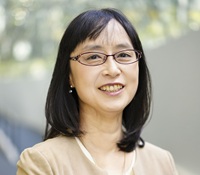
Azusa Kamikouchi
Graduate School of Science, Nagoya University
Graduate School of Science, Nagoya University
Biography
| 2002 | Ph.D., Graduate School of Pharmaceutical Sciences, The University of Tokyo |
| 2005–2008 | Research Fellow at the National Institute for Basic Biology / Institute of Molecular and Cellular Biosciences (JST BIRD) |
| 2005–2008 | Research Fellow at the University of Cologne, Germany (Humboldt Research Fellow / JSPS Overseas Fellow) |
| 2008–2011 | Assistant Professor, Faculty of Life Sciences, Tokyo University of Pharmacy and Life Sciences |
| 2011–Present | Staff Scientist, Director, Tokyo Metropolitan Institute for Neuroscience |
| 2002 | Professor, Graduate School of Science, Nagoya University |
| 2022–Present | Concurrent Professor, Institute of Transformative Bio-Molecules (WPI-ITbM), Nagoya University |


HOME | The Japan Neuroscience Society
- About Us
- About Us
- Articles of Incorporation of the Japan Neuroscience Society
- Guidelines
- Directors and Committee Members of the Japan Neuroscience Society
- Councilors
- Honorary Members
- Honorary Members : Dr. Masao Ito
- Supporting Members
- Message from the President
- Laboratory list
- The 50th Anniversary Event
- Public Outreach
- Brain Bee
- Official Mascot
- News from JNS
- Annual Meetings
- Annual Meeting List
- The JNS Meeting Planner List
- The 50th Annual Meeting of the Japan Neuroscience Society
- NEURO2026
- The 48th Annual Meeting of the Japan Neuroscience Society
- NEURO2024
- The 46th annual meeting of the Japan Neuroscience Society
- NEURO2022
- The 44th Annual Meeting of the Japan Neuroscience Society
- Neuroscience Research
- Neuroscience Research
- Articles in Press
- Latest Issue
- Back Issues
- Submit Your Paper
- About the Journal
- Online Subscription
(For Members) - Announcements
- Careers & Training & Awards & Funding
- Faculty and Other positions
- Graduate Student Position/Briefing Session
- Grants/Fellowship/TA Programs
- Call for Applicants
- Awards
- Travel Awards
- Academic Events
- Academic Events
- Advocacy
- Guidelines for Ethical Planning and Conduct of Brain and Neuroscience Research Involving Human Subjects
- Guidelines for Animal Experimentation in Neuroscience
- Gender Equality, Inclusion and Diversity
- Member Only
- Online Subscription
(For Members) - The JNS Meeting Planner List [Password Required]
- Log in
- Neuroscience News (Past Issues)
- How to join
- About Membership
- Admission procedure
- Membership Categories

