





◆"Guidelines for Ethical Planning and Conduct of Brain and Neuroscience Research Involving Human Subjects" (Amended in 2025) has been published.
◆Message from the President
◆[Publication] Neuroscience News FY2026 No.2
◆Winners for the 26th Japan Neuroscience Society Young Investigator Award Selected!
◆Awardee of 2026 Joseph Altman Award in Developmental Neuroscience, Kristen Brennand
◆Announcement of the 2026 JNS-CNS Travel Award Program Awardees
◆Azusa Kamikouchi, the 40th Recipient of the Tsukahara Award in 2025
◆Yoshihiro Yoshihara, the 28th Recipient of the Tokizane Award in 2026
◆[Publication] Neuroscience News FY2026 No.1
◆Announcement of the Awardees of the 2026 Neuroscience Research (NSR) Paper Awards.
◆Announcement of the 28th Recipient of the Tokizane Prize in 2026
◆Awardee of the 2026 Joseph Altman Award in Developmental Neuroscience
◆The Winners of the Brain Prize 2026
◆THE BRAIN PRIZE 2026 WINNERS ANNOUNCED ON MARCH 5TH (CET)
◆[Publication] Neuroscience News FY2025 No.4
◆Announcement of FENS Forum 2026 Travel Award Awardees
◆[Publication] Neuroscience News FY2025 No.3
◆Participating Report of the 18th Annual Meeting of Chinese Neuroscience Society (CNS 2025)
◆[Publication] Neuroscience News FY2025 No.2
◆[50th Anniversary of JNS] Event Information! - The 48th annual meeting in July / Miraikan - The National Museum of Emerging Science and Innovation in August
◆Announcement of FENS Summer School 2025 Travel Award Awardees
◆Winners for the 25nd Japan Neuroscience Society Young Investigator Award Selected!
◆Tadashi Isa, the 27th Recipient of the Tokizane Award in 2025
◆Announcement of the 2025 JNS-CNS Travel Award Program Awardees
◆[Publication] Neuroscience News FY2025 No.1
◆Awardee of 2025 Joseph Altman Award in Developmental Neuroscience, Tomohisa Toda
◆ Announcement of the 27th Recipient of the Tokizane Award in 2025
◆Announcement of the Awardees of the 2025 Neuroscience Research (NSR) Paper Awards.
◆Awardee of the 2025 Joseph Altman Award in Developmental Neuroscience
◆Promotional video for Neuroscience Research is now available on our website.
◆The Winners of the Brain Prize 2025
◆THE BRAIN PRIZE 2025 WINNERS ANNOUNCED ON MARCH 5TH (CET)
◆[Publication] Neuroscience News FY 2024 No.4
◆Participating Report of the 17th Annual Meeting of Chinese Neuroscience Society (CNS 2024)
◆“Meet the Editors” Session (July 24, 25 and 26, 2024) will be held at NEURO2024
◆Neuroscience Research Special Issue(Vol.197) is available for free now
◆Neuroscience Research is now Full Gold Open Access journal
◆Atsushi Nambu, The 26th Recipient of the Tokizane Award in 2024
◆Awardee of 2024 Joseph Altman Award in Developmental Neuroscience, Shawn Sorrells
◆Announcement of the 26th Recipients of the Tokizane Prize in 2024
◆Announcement of FENS Forum 2024 Travel Award Awardees
◆Announcement of the 2024 JNS-CNS Travel Award Program Awardees
◆Awardee of the 2024 Joseph Altman Award in Developmental Neuroscience
◆The Winners of the Brain Prize 2024
◆THE BRAIN PRIZE 2024 WINNERS ANNOUNCED ON MARCH 5TH (CET)/ 6TH MARCH(JST)
◆FENS Summer School 2023 Report (Owusu Mensah Richard Nana Abankwah)
◆Call for applications: Chief Editors of Neuroscience
◆Message from the President 'Our Neuroscience Society'
◆Awardee of 2023 Joseph Altman Award in Developmental Neuroscience, Tomasz Nowakowski
◆Announcement of the 24th Recipients of the Tokizane Prize in 2023
◆Announcement of the Awardees of the 2023 Neuroscience Research (NSR) Paper Awards.
◆Awardee of the 2023 Joseph Altman Award in Developmental Neuroscience
◆The Winners of the Brain Prize 2023
◆The list of councilors is now available.
◆THE BRAIN PRIZE 2023 WINNERS ANNOUNCED ON 23RD MARCH(CET)/ 24TH MARCH(JST)
◆Message from the president
◆The Brain Prize Webinar – Circuits for Movement
◆Awardee of 2022 Joseph Altman Award in Developmental Neuroscience, Denis Jabaudon
◆Announcement of the 2022 JNS-CNS Travel Award Program Awardees
◆Winners for the 22nd Japan Neuroscience Society Young Investigator Award Selected!
◆Announcement of the 24th Recipients of the Tokizane Award in 2022
◆Announcement of the Awardee of the 2022 Joseph Altman Award in Developmental Neuroscience
◆The Winners of the Brain Prize 2022
◆Announcement of the Awardees of the 2022 Neuroscience Research (NSR) Paper Awards.
◆THE BRAIN PRIZE 2022 WINNERS ANNOUNCED ON 3RD MARCH(CET)/ 4TH MARCH(JST)
◆Announcement of FENS Forum 2022 Travel Awardees
◆Call for SfN2022 Session Proposals
◆Virtual SfN 2021: Global Neuroscience Social
◆Announcement of 2021 JNS-SfN Exchange Travel Awardees
◆Awardees of the 2021 Japan Neuroscience Society Young Investigator Award
◆The Japan Neuroscience Society' s official Journal Neuroscience Research presents NSR Paper Awards
◆Awardee of 2021 Joseph Altman Award in Developmental Neuroscience, Sergiu P. Pasca
◆Announcement of the 23rd Recipient of the Tokizane Prize in 2021
◆Announcement of the Awardee of the 2021 Joseph Altman Award in Developmental Neuroscience
◆Our website has become smartphone friendly.
◆Message from the President
◆JNS is proud to endorse the ALBA Declaration on Equity and Inclusion.
◆Call for Papers for a Special Issue of Brain Structure and Function
◆Awardee of 2020 Joseph Altman Award in Developmental Neuroscience, Haruki Takeuchi
◆Announcement of the Awardee of the 2020 Joseph Altman Award in Developmental Neuroscience
◆JNS join the fight against COVID-19 pandemic
◆Announcement of the 22nd Recipient of the Tokizane Prize in 2020
◆Announcement of 2019 JNS-SfN Exchange Travel Awardees
◆Special Rates Offer for FENS Forum 2020 registration
◆Election of Panel Directors
◆The JNS Secretariat Desk at NEURO2019
◆Announcement of the 2019 Japan Neuroscience Society Young Investigator Awardees
◆Yasunori Hayashi
The 21st Recipient of the Tokizane Prize in 2019
◆Official notice about the election of Panel Directors
◆Altman Award in Developmental Neuroscience
◆Altman Award in Developmental Neuroscience
◆Announcement of the Awardee of the 2019 Joseph Altman Award in Developmental Neuroscience
◆Announcement of the 21st Recipient of the Tokizane Prize in 2019
◆Cast your vote for the new JNS official character!!
◆Special Rates Offer for 2019 ANS Conference,
Australasian Neuroscience Society - 39th Annual Scientific
Meeting registration
◆Altman Award in Developmental Neuroscience
◆Announcement of the Awardee of the 2018 Joseph Altman Award in Developmental Neuroscience
◆Participating report of the 12th biennial Conference of CNS : Kai Li
◆Participating report of the 12th biennial Conference of CNS : Kelvin Hui
◆Itaru Imayoshi the First Awardee of the Altman Award in Developmental Neuroscience
◆Announcement of the First Awardee of the Altman Award in Developmental Neuroscience
◆2020 Student Member Re-Registration and Junior
Member Registration
◆Message from the President
◆[Publication] Neuroscience News FY2026 No.2
◆Winners for the 26th Japan Neuroscience Society Young Investigator Award Selected!
◆Awardee of 2026 Joseph Altman Award in Developmental Neuroscience, Kristen Brennand
◆Announcement of the 2026 JNS-CNS Travel Award Program Awardees
◆Azusa Kamikouchi, the 40th Recipient of the Tsukahara Award in 2025
◆Yoshihiro Yoshihara, the 28th Recipient of the Tokizane Award in 2026
◆[Publication] Neuroscience News FY2026 No.1
◆Announcement of the Awardees of the 2026 Neuroscience Research (NSR) Paper Awards.
◆Announcement of the 28th Recipient of the Tokizane Prize in 2026
◆Awardee of the 2026 Joseph Altman Award in Developmental Neuroscience
◆The Winners of the Brain Prize 2026
◆THE BRAIN PRIZE 2026 WINNERS ANNOUNCED ON MARCH 5TH (CET)
◆[Publication] Neuroscience News FY2025 No.4
◆Announcement of FENS Forum 2026 Travel Award Awardees
◆[Publication] Neuroscience News FY2025 No.3
◆Participating Report of the 18th Annual Meeting of Chinese Neuroscience Society (CNS 2025)
◆[Publication] Neuroscience News FY2025 No.2
◆[50th Anniversary of JNS] Event Information! - The 48th annual meeting in July / Miraikan - The National Museum of Emerging Science and Innovation in August
◆Announcement of FENS Summer School 2025 Travel Award Awardees
◆Winners for the 25nd Japan Neuroscience Society Young Investigator Award Selected!
◆Tadashi Isa, the 27th Recipient of the Tokizane Award in 2025
◆Announcement of the 2025 JNS-CNS Travel Award Program Awardees
◆[Publication] Neuroscience News FY2025 No.1
◆Awardee of 2025 Joseph Altman Award in Developmental Neuroscience, Tomohisa Toda
◆ Announcement of the 27th Recipient of the Tokizane Award in 2025
◆Announcement of the Awardees of the 2025 Neuroscience Research (NSR) Paper Awards.
◆Awardee of the 2025 Joseph Altman Award in Developmental Neuroscience
◆Promotional video for Neuroscience Research is now available on our website.
◆The Winners of the Brain Prize 2025
◆THE BRAIN PRIZE 2025 WINNERS ANNOUNCED ON MARCH 5TH (CET)
◆[Publication] Neuroscience News FY 2024 No.4
◆Participating Report of the 17th Annual Meeting of Chinese Neuroscience Society (CNS 2024)
◆“Meet the Editors” Session (July 24, 25 and 26, 2024) will be held at NEURO2024
◆Neuroscience Research Special Issue(Vol.197) is available for free now
◆Neuroscience Research is now Full Gold Open Access journal
◆Atsushi Nambu, The 26th Recipient of the Tokizane Award in 2024
◆Awardee of 2024 Joseph Altman Award in Developmental Neuroscience, Shawn Sorrells
◆Announcement of the 26th Recipients of the Tokizane Prize in 2024
◆Announcement of FENS Forum 2024 Travel Award Awardees
◆Announcement of the 2024 JNS-CNS Travel Award Program Awardees
◆Awardee of the 2024 Joseph Altman Award in Developmental Neuroscience
◆The Winners of the Brain Prize 2024
◆THE BRAIN PRIZE 2024 WINNERS ANNOUNCED ON MARCH 5TH (CET)/ 6TH MARCH(JST)
◆FENS Summer School 2023 Report (Owusu Mensah Richard Nana Abankwah)
◆Call for applications: Chief Editors of Neuroscience
◆Message from the President 'Our Neuroscience Society'
◆Awardee of 2023 Joseph Altman Award in Developmental Neuroscience, Tomasz Nowakowski
◆Announcement of the 24th Recipients of the Tokizane Prize in 2023
◆Announcement of the Awardees of the 2023 Neuroscience Research (NSR) Paper Awards.
◆Awardee of the 2023 Joseph Altman Award in Developmental Neuroscience
◆The Winners of the Brain Prize 2023
◆The list of councilors is now available.
◆THE BRAIN PRIZE 2023 WINNERS ANNOUNCED ON 23RD MARCH(CET)/ 24TH MARCH(JST)
◆Message from the president
◆The Brain Prize Webinar – Circuits for Movement
◆Awardee of 2022 Joseph Altman Award in Developmental Neuroscience, Denis Jabaudon
◆Announcement of the 2022 JNS-CNS Travel Award Program Awardees
◆Winners for the 22nd Japan Neuroscience Society Young Investigator Award Selected!
◆Announcement of the 24th Recipients of the Tokizane Award in 2022
◆Announcement of the Awardee of the 2022 Joseph Altman Award in Developmental Neuroscience
◆The Winners of the Brain Prize 2022
◆Announcement of the Awardees of the 2022 Neuroscience Research (NSR) Paper Awards.
◆THE BRAIN PRIZE 2022 WINNERS ANNOUNCED ON 3RD MARCH(CET)/ 4TH MARCH(JST)
◆Announcement of FENS Forum 2022 Travel Awardees
◆Call for SfN2022 Session Proposals
◆Virtual SfN 2021: Global Neuroscience Social
◆Announcement of 2021 JNS-SfN Exchange Travel Awardees
◆Awardees of the 2021 Japan Neuroscience Society Young Investigator Award
◆The Japan Neuroscience Society' s official Journal Neuroscience Research presents NSR Paper Awards
◆Awardee of 2021 Joseph Altman Award in Developmental Neuroscience, Sergiu P. Pasca
◆Announcement of the 23rd Recipient of the Tokizane Prize in 2021
◆Announcement of the Awardee of the 2021 Joseph Altman Award in Developmental Neuroscience
◆Our website has become smartphone friendly.
◆Message from the President
◆JNS is proud to endorse the ALBA Declaration on Equity and Inclusion.
◆Call for Papers for a Special Issue of Brain Structure and Function
◆Awardee of 2020 Joseph Altman Award in Developmental Neuroscience, Haruki Takeuchi
◆Announcement of the Awardee of the 2020 Joseph Altman Award in Developmental Neuroscience
◆JNS join the fight against COVID-19 pandemic
◆Announcement of the 22nd Recipient of the Tokizane Prize in 2020
◆Announcement of 2019 JNS-SfN Exchange Travel Awardees
◆Special Rates Offer for FENS Forum 2020 registration
◆Election of Panel Directors
◆The JNS Secretariat Desk at NEURO2019
◆Announcement of the 2019 Japan Neuroscience Society Young Investigator Awardees
◆Yasunori Hayashi
The 21st Recipient of the Tokizane Prize in 2019
◆Official notice about the election of Panel Directors
◆Altman Award in Developmental Neuroscience
◆Altman Award in Developmental Neuroscience
◆Announcement of the Awardee of the 2019 Joseph Altman Award in Developmental Neuroscience
◆Announcement of the 21st Recipient of the Tokizane Prize in 2019
◆Cast your vote for the new JNS official character!!
◆Special Rates Offer for 2019 ANS Conference,
Australasian Neuroscience Society - 39th Annual Scientific
Meeting registration
◆Altman Award in Developmental Neuroscience
◆Announcement of the Awardee of the 2018 Joseph Altman Award in Developmental Neuroscience
◆Participating report of the 12th biennial Conference of CNS : Kai Li
◆Participating report of the 12th biennial Conference of CNS : Kelvin Hui
◆Itaru Imayoshi the First Awardee of the Altman Award in Developmental Neuroscience
◆Announcement of the First Awardee of the Altman Award in Developmental Neuroscience
◆2020 Student Member Re-Registration and Junior
Member Registration
Yoshihiro Yoshihara, the 28th Recipient of the Tokizane Award in 2026
Neural Circuit Genetics of the Olfactory System and the Claustrum
Yoshihiro Yoshihara
RIKEN Center for Brain Science
RIKEN Center for Brain Science
I am deeply honored to receive the prestigious Toshihiko Tokizane Award. I would like to express my heartfelt gratitude to the members of the selection committee, the professors who have guided me throughout my career, the collaborators, and the many members of my laboratory who have worked alongside me on this research.
It was in 1989 that I first became fascinated by the world of olfaction. After completing my Ph.D. program at the Graduate School of Pharmaceutical Sciences of Kyoto University, I joined the Department of Neuroscience, Osaka Bioscience Institute, as a postdoctoral researcher. At the time, Dr. Kensaku Mori (then Deputy Director; now Professor Emeritus at The University of Tokyo) was conducting immunohistochemical experiments right next to my bench. Although I was just a novice researcher, Dr Mori -who was already a leading authority in olfactory research- kindly and patiently taught me the fundamentals of brain science, particularly neuroanatomy and physiology. He also included me in discussion about “the odor map in the olfactory bulb”, a concept that had not yet been published at the time. Since Buck and Axel published their paper on the discovery of olfactory receptor multigene family in 1991, I was fortunate enough to be quietly taught the answer to the fundamental question in olfactory research -“How is olfactory information represented in the brain?”- two years prior. Furthermore, visiting the laboratories of Gordon Shepherd and Richard Axel in 1991, and subsequently interacting with many young scientists who would go on to lead the field of olfactory research, was a transformative experience that marked the beginning of my deep immersion in the field. In this way, I found myself completely engrossed in the world of olfactory research right at its dawn.
From the 1990s to the 2000s, the olfactory research mainly centered on a molecular-based strategy (molecule → cell → circuit → behavior). Beginning with the discovery of olfactory receptor genes, researchers identified signaling molecules involved in odor reception and molecules governing the formation of the primary olfactory circuit from the olfactory epithelium to the olfactory bulb. Using mice as a model organism and employing molecular biology, biochemistry, and gene engineering techniques, we discovered novel molecules playing important roles in the olfactory system, such as Telencephalin, OCAM, BID-1, BIG-2 and Goofy, and also identified groups of axon guidance molecules and transcription factors that function in the wiring of olfactory circuits. These findings, combined with the work of other researchers, have contributed to elucidating the overall molecular mechanisms underlying the formation and function of the primary olfactory system.
However, by the late 2000s, I began to sense the limitations of molecule-based olfactory research and initiated a completely opposite approach based on diverse olfactory behaviors: I aimed to elucidate the molecular, cellular and circuit mechanisms underlying various olfactory behaviors. By employing zebrafish as a model organism, this strategy proved successful, revealing neural mechanisms for the attraction to amino acids and ATP emitted by food sources, the courtship behavior exhibited by male fish in response to prostaglandin F2α secreted by ovulating female fish, the avoidance in response to high concentration of carbon dioxide¹⁹, and the alarm reaction that warn conspecifics of danger via Schreckstoff secreted from the skin of injured fish. In addition, we have successfully developed a genetic method for single-neuron visualization of the secondary olfactory pathway from the olfactory bulb to higher-order centers. Furthermore, the transsynaptic neural circuit tracing technology using WGA transgene which we developed in parallel with the olfactory research has been effectively utilized by many researchers in various model organisms ranging from invertebrates to primates.
On a different note, deep within the cerebral cortex of all mammals including humans, there exists a thin, sheet-like structure called the “claustrum”. Because the claustrum has reciprocal connections with all the neocortical areas, it has been suggested that the claustrum may be involved in global higher-order brain functions, and numerous hypotheses have been proposed regarding its role in the multisensory integration, the attentional load allocation, and the control of synchronized brain activities. Particularly, in his final review article published in 2005, Francis Crick put forward the bold hypothesis that “the claustrum might be the seat of consciousness”, yet the true nature of the claustrum’s function remained shrouded in mystery. Around 2010, we were generating numerous transgenic mouse lines expressing fluorescent proteins or DNA recombinase Cre in various types of neurons along the olfactory circuit when we accidentally discovered that Cre was expressed specifically in the claustral neurons in one of these lines. It was truly serendipity. In these mice, when channelrhodopsin was expressed selectively in the claustrum and these neurons were excited by light stimulation, synchronous firing of inhibitory neurons in the cerebral neocortex occurred, followed by “down state” of neural activities in widespread cortical areas lasting approximately 150 msec. This suggests that the claustrum may be involved in inducing synchronous neural activities throughout the cortex and, furthermore, in regulating the level of consciousness. Moving forward, we plan to use this mouse line and employ neural circuit genetic techniques to validate Crick’s hypothesis, aiming to clarify the function of the claustruma and elucidate the neural mechanisms of consciousness.
Selected Publications
Yoshihara et al. Neuron 12: 541-553 (1994)
Yoshihara et al. Neuron 13: 415-426 (1994)
Yoshihara et al. Journal of Neuroscience 17: 5830-5842 (1997)
Yoshihara et al. Neuron 22: 33-41 (1999)
Mori et al. Science 286: 711-715 (1999)
Mitsui et al. Journal of Neuroscience 25: 1122-1131 (2005)
Sato et al. Journal of Neuroscience 25: 4889-4897 (2005)
Yoshihara et al. Development 132: 751-762 (2005)
Miyasaka et al. Development 132: 1283-1293 (2005)
Matsuno et al. Journal of Neuroscience 26: 1776-1786 (2006)
Furutani et al. Journal of Neuroscience 27: 8866-8876 (2007)
Sato et al. Journal of Neuroscience 27: 1606-1615 (2007)
Miyasaka et al. Development 134: 2459-2468 (2007)
Kaneko-Goto et al. Neuron 57: 834-846 (2008)
Miyasaka et al. Journal of Neuroscience 29: 4756-4767 (2009)
Koide et al. Proceedings of National Academy of Sciences USA 106: 9884-9889 (2009)
Mizuguchi et al. Journal of Neuroscience 32: 8831-8844 (2012)
Kaneko-Goto et al. Journal of Neuroscience 33: 12987-12996 (2013)
Miyasaka et al. Nature Communications 5: 3639 (2014)
Yabuki et al. Nature Neuroscience 19: 897-904 (2016)
Wakisaka et al. Current Biology 27: 1437-1447 (2017)
Koide et al. Cell Reports 22: 1115-1123 (2018)
Narikiyo et al. Nature Neuroscience 23: 741-753 (2020)
Masuda et al. Current Biology 34: 1377-1389 (2024)
Yoshihara et al. Neuron 13: 415-426 (1994)
Yoshihara et al. Journal of Neuroscience 17: 5830-5842 (1997)
Yoshihara et al. Neuron 22: 33-41 (1999)
Mori et al. Science 286: 711-715 (1999)
Mitsui et al. Journal of Neuroscience 25: 1122-1131 (2005)
Sato et al. Journal of Neuroscience 25: 4889-4897 (2005)
Yoshihara et al. Development 132: 751-762 (2005)
Miyasaka et al. Development 132: 1283-1293 (2005)
Matsuno et al. Journal of Neuroscience 26: 1776-1786 (2006)
Furutani et al. Journal of Neuroscience 27: 8866-8876 (2007)
Sato et al. Journal of Neuroscience 27: 1606-1615 (2007)
Miyasaka et al. Development 134: 2459-2468 (2007)
Kaneko-Goto et al. Neuron 57: 834-846 (2008)
Miyasaka et al. Journal of Neuroscience 29: 4756-4767 (2009)
Koide et al. Proceedings of National Academy of Sciences USA 106: 9884-9889 (2009)
Mizuguchi et al. Journal of Neuroscience 32: 8831-8844 (2012)
Kaneko-Goto et al. Journal of Neuroscience 33: 12987-12996 (2013)
Miyasaka et al. Nature Communications 5: 3639 (2014)
Yabuki et al. Nature Neuroscience 19: 897-904 (2016)
Wakisaka et al. Current Biology 27: 1437-1447 (2017)
Koide et al. Cell Reports 22: 1115-1123 (2018)
Narikiyo et al. Nature Neuroscience 23: 741-753 (2020)
Masuda et al. Current Biology 34: 1377-1389 (2024)
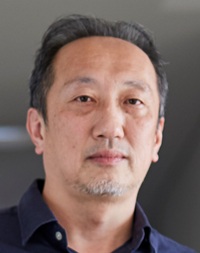
Yoshihiro Yoshihara
RIKEN Center for Brain Science
RIKEN Center for Brain Science
Short CV
| 1984 | Graduated from Faculty of Pharmaceutical Sciences, Kyoto University |
| 1989 | Finished Graduate School of Pharmaceutical Sciences, Kyoto University, obtained Ph.D. |
| 1989 | Postdoctoral Researcher, Osaka Bioscience Institute |
| 1992 | Lecturer, Osaka Medical College |
| 1996 | Associate Professor, Osaka Medical College |
| 1998 | Team Leader, RIKEN Brain Science Institute |
| 2018 | Team Leader, RIKEN Center for Brain Science |
| 2020 | Deputy Director, RIKEN Center for Brain Science |
| 2025 | Team Director, RIKEN Center for Brain Science |


HOME | The Japan Neuroscience Society
- About Us
- About Us
- Articles of Incorporation of the Japan Neuroscience Society
- Guidelines
- Directors and Committee Members of the Japan Neuroscience Society
- Councilors
- Honorary Members
- Honorary Members : Dr. Masao Ito
- Supporting Members
- Message from the President
- Laboratory list
- The 50th Anniversary Event
- Public Outreach
- Brain Bee
- Official Mascot
- News from JNS
- Annual Meetings
- Annual Meeting List
- The JNS Meeting Planner List
- The 50th Annual Meeting of the Japan Neuroscience Society
- NEURO2026
- The 48th Annual Meeting of the Japan Neuroscience Society
- NEURO2024
- The 46th annual meeting of the Japan Neuroscience Society
- NEURO2022
- The 44th Annual Meeting of the Japan Neuroscience Society
- Neuroscience Research
- Neuroscience Research
- Articles in Press
- Latest Issue
- Back Issues
- Submit Your Paper
- About the Journal
- Online Subscription
(For Members) - Announcements
- Careers & Training & Awards & Funding
- Faculty and Other positions
- Graduate Student Position/Briefing Session
- Grants/Fellowship/TA Programs
- Call for Applicants
- Awards
- Travel Awards
- Academic Events
- Academic Events
- Advocacy
- Guidelines for Ethical Planning and Conduct of Brain and Neuroscience Research Involving Human Subjects
- Guidelines for Animal Experimentation in Neuroscience
- Gender Equality, Inclusion and Diversity
- Member Only
- Online Subscription
(For Members) - The JNS Meeting Planner List [Password Required]
- Log in
- Neuroscience News (Past Issues)
- How to join
- About Membership
- Admission procedure
- Membership Categories

